

Booking.com is one of the world’s largest travel platforms. Millions rely on it for hotels and flights, believing the brand ensures safety and reliability.
But for travelers across India, the USA, the UK, and Europe, their experiences tell another story: stranded stays, hidden charges, cancelled bookings, flight downgrades, and even scams within Booking.com’s own messaging system.
TrapWatch brings together six real stories to show the patterns and what you can learn to avoid falling into the same traps.
Case 1: Denied Check-In During a Major Event (India)
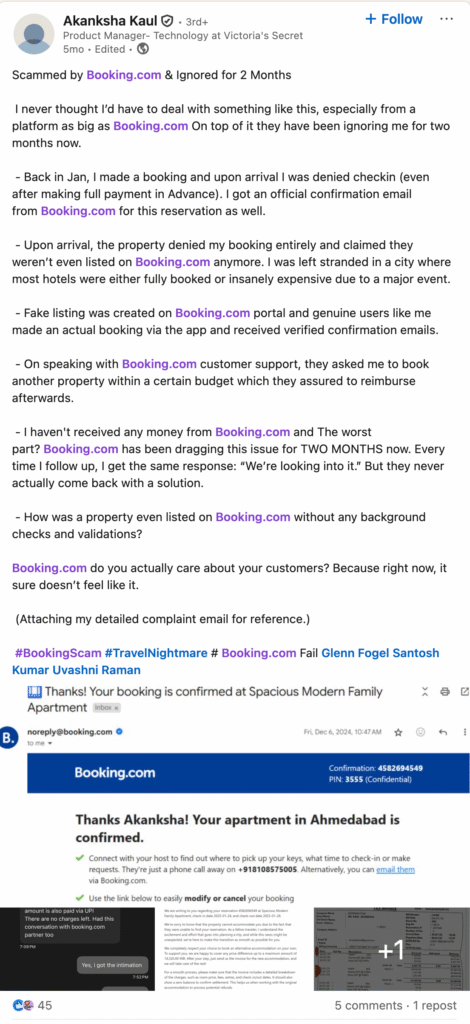
In January, a traveler booked a hotel via Booking.com, received an official confirmation email, and paid in advance. On arrival, the property denied the booking, saying they were no longer listed on the platform.
The traveler was stranded during a citywide event when most hotels were already booked or overpriced. Booking.com’s customer support promised reimbursement if another booking was made. Two months later, despite repeated follow-ups, no refund had arrived — only robotic “we’re looking into it” messages.
Case 2: Forced to Sleep Roadside After Extra Charges Demanded (India)
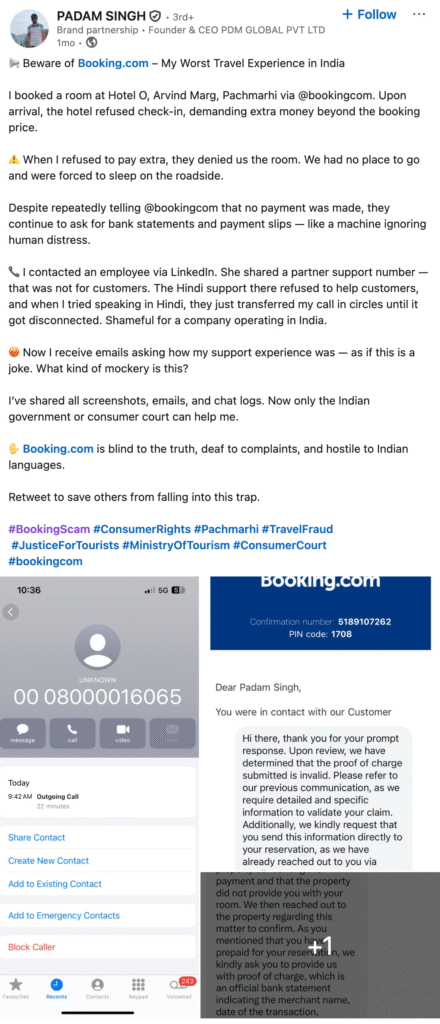
Another traveler booked a stay in Pachmarhi through Booking.com. On arrival, the hotel demanded additional money beyond the booking price. When the guest refused, the hotel denied check-in.
Stranded at night with no alternatives, the traveler and his companion had to sleep on the roadside. When he escalated to Booking.com, he was repeatedly asked for irrelevant documents (like bank slips, even though no payment had been made), and passed around support lines until calls disconnected.
Case 3: Downgraded Flight to Bali Without Consent (India → Indonesia)
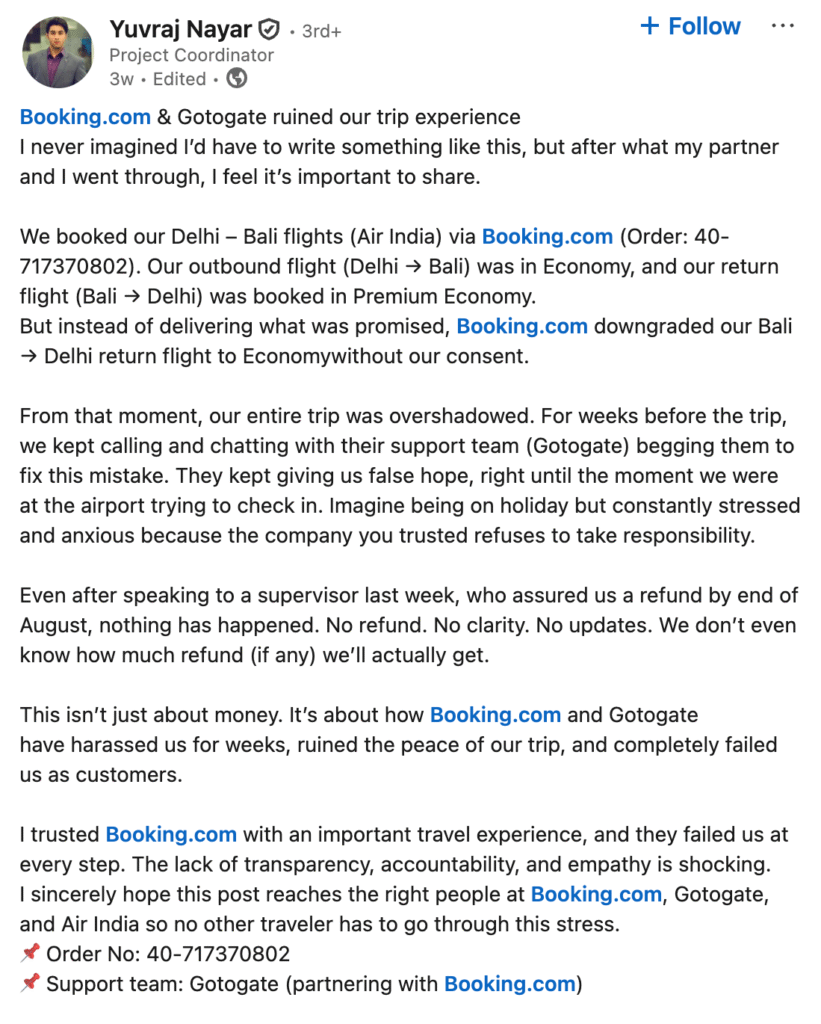
A couple booked their Delhi–Bali trip via Booking.com. Outbound was in Economy, return in Premium Economy. Without consent, Booking.com downgraded their Bali → Delhi flight to Economy.
For weeks before departure, they begged customer support (via Gotogate, a Booking.com partner) to fix the mistake. They were reassured repeatedly, but nothing changed. At the airport, the downgrade was confirmed. Even after the trip, promised refunds were not processed.
What should have been a joyful holiday was marred by anxiety, harassment, and a total lack of accountability.
Case 4: Fake Photos and Unsafe Property in Belfast (UK)
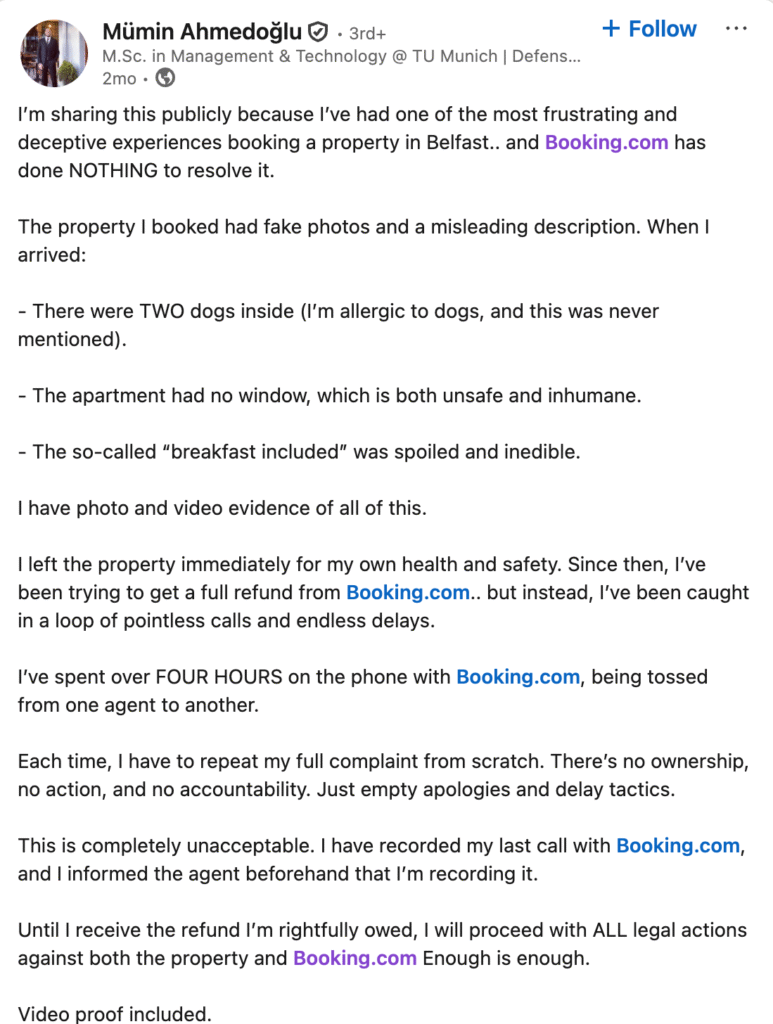
In Belfast, a traveler arrived at a property booked via Booking.com only to find a completely different reality:
- Dogs inside the apartment (not disclosed, triggering allergies).
- No windows (unsafe, inhumane).
- Spoiled “breakfast included.”
He left immediately, documenting the issues with photos and videos. But instead of a straightforward refund, he spent over four hours on calls with Booking.com, repeating his complaint to different agents, getting apologies but no action. His holiday was disrupted, his health compromised, and his trust in the platform shattered.
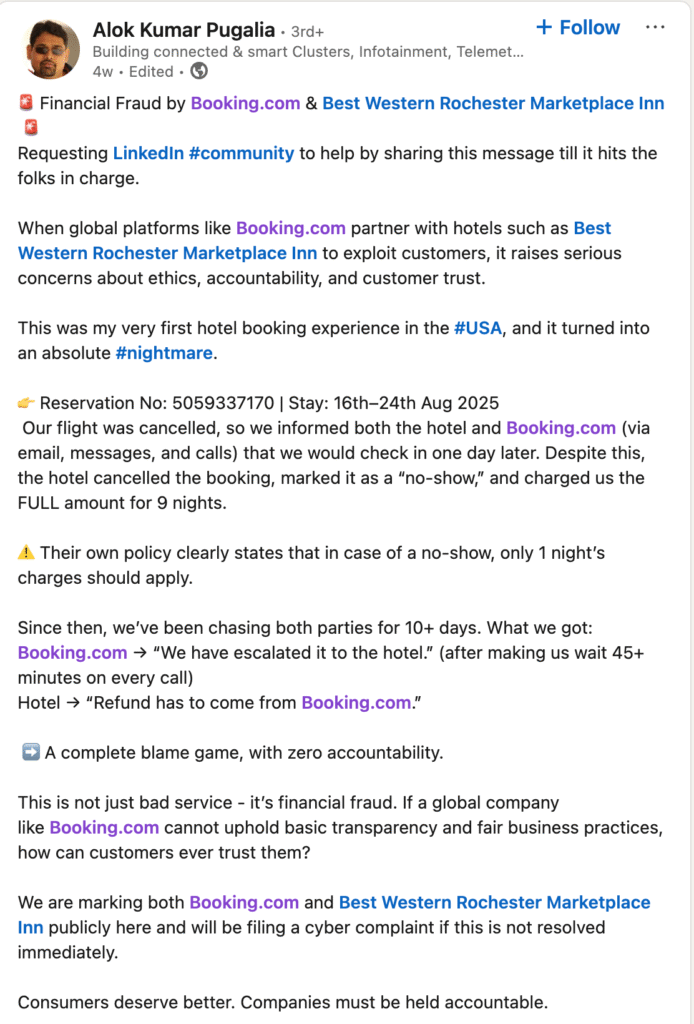
Case 5: Wrongly Charged for 9 Nights After Flight Delay (India – USA)
A first-time traveler to the USA booked Best Western Rochester Marketplace Inn through Booking.com. Due to a flight cancellation, he informed both the hotel and Booking.com he would check in one day late.
Despite this, the hotel cancelled the booking as a “no-show” and charged him for all nine nights. Their own policy stated that only one night should be charged. Booking.com blamed the hotel, the hotel blamed Booking.com, and the traveler was left caught in a blame game with no refund in sight.
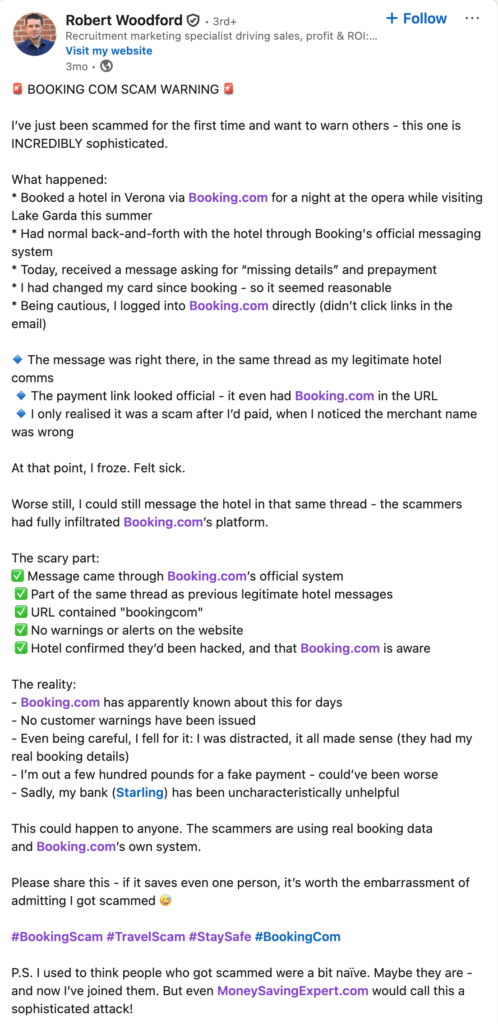
Case 6: Scam Inside Booking.com’s Own Messaging System (Italy – Verona)
One traveler, preparing for a night at the opera, booked a Verona hotel through Booking.com. All seemed fine until he received a request for “missing details” and prepayment inside Booking.com’s official messaging thread.
- The payment link looked genuine, even with “bookingcom” in the URL.
- It appeared within the same thread as legitimate hotel messages.
- The hotel later confirmed their account had been hacked — and that Booking.com already knew about such scams.
Despite double-checking by logging into Booking.com directly, the traveler still got trapped. The money was gone, and his bank provided little help.
This case highlights a new danger: fraudsters exploiting Booking.com’s own platform to steal real customers’ money.
This isn’t an isolated case. The Guardian reported that hackers are infiltrating Booking.com’s internal messaging system. Between June 2023 and September 2024, Action Fraud in the UK received 532 reports of “pay-to-secure-holiday” scams via Booking.com, with victims losing about £370,000.
In Australia, the ACCC recorded a 580% surge in Booking.com–related scams, with losses above AUD $337,000 in a single year.
Patterns Emerging
Across these five stories, common traps stand out:
- Fake or misleading listings slip through.
- Hotels demand extra money or refuse confirmed bookings.
- Refunds stall for weeks or months, leaving travelers stranded.
- Opaque partners (like Gotogate) avoid accountability.
- Security gaps allow hackers to infiltrate Booking.com’s messaging system.
- Customer support fails — scripted replies, endless transfers, and no resolution.
This is not about one unlucky traveler. It’s a systemic issue affecting customers across continents.
The Impact
- Financial: Loss of thousands in hotel stays and flight tickets.
- Emotional: Travelers stranded, humiliated, even forced to sleep outside.
- Trust: Repeated failures erode confidence in a brand that markets itself as safe and global.
This is echoed in wider traveler feedback:
- On Trustpilot, Booking.com’s overall rating includes many complaints around refunds, cancellations, and poor customer support.
- On TripAdvisor forums, users have long warned about hidden cancellation terms and “fine-print” traps in Booking.com listings.
Lessons for Travelers
While platforms evolve, travelers must adopt their own self-defense mechanisms to navigate these digital traps:
- Directly Confirm Complex Bookings: For critical bookings (especially non-refundable or international ones), call or email the property directly after booking to confirm they have received your reservation and that all payment/cancellation terms match your confirmation email.
- Prefer ‘Pay-at-Property’: Whenever possible, choose options that allow you to pay upon arrival. This retains your financial leverage in case of a problem at check-in.
- Be Skeptical of In-App Payment Links: Treat all payment requests—even those inside the platform’s official chat—with extreme caution. If a message asks you to click a link to “verify” or “prepay,” check the booking confirmation for the actual policy. If in doubt, do not click the link; contact Booking.com or the hotel through a verified phone number or a new chat thread.
- Document Everything (Digital Proof is King): Take screenshots of the listing, your confirmation email, all messages, and record any phone calls (after informing the agent, as one user did). In a dispute, digital proof is your strongest ally.
- Know Your Escalation Path: If the platform fails, do not hesitate to escalate. In India, options include filing a complaint via the National Consumer Helpline (NCH) portal or approaching the appropriate Consumer Commission. For credit card charges, a chargeback request to your bank or card issuer can often expedite recovery in cases of services not rendered or outright scams.
Disclaimer
These six stories are based on publicly shared social media experiences. While they illustrate patterns of risk, TrapWatch does not assert that Booking.com is deliberately acting maliciously. The goal is to raise awareness of pitfalls so travelers can make informed choices.
TrapWatch exists to archive these real stories so others can learn and prepare. If you’ve had a similar experience — with Booking.com or any other platform — share it with us. Your story might be the warning that saves someone else.
Leave a Reply